
Zanzibar Travel Guide: Choosing Where to Stay
Zanzibar is often imagined as one tropical island with white sand, turquoise water and a scattering of beautiful beach hotels. While all of that exists, choosing where to stay is more complicated and more interesting.
The island’s coastline changes dramatically as you travel around it. In the north, the sea remains accessible for swimming through much of the day and the atmosphere is livlier. Along the east coast, the tides transform the landscape, revealing vast sand flats, shallow lagoons and coral reefs before the water returns. Some areas are centred around large resorts, while others are home to small boutique hotels, fishing villages or extraordinarily secluded private islands.
The best place to stay in Zanzibar therefore depends less on finding the “best beach” and more on deciding what sort of holiday you want. Do you want to swim in the ocean whenever you please? Walk for miles along emplty beach? Be close to restaurants and village life? Snorkel around Mnemba Atoll? Or retreat somewhere wonderfully quiet after a busy safari?
This guide explains the difference between Zanzibar’s main areas, along with the practical details that can make or break a stay.
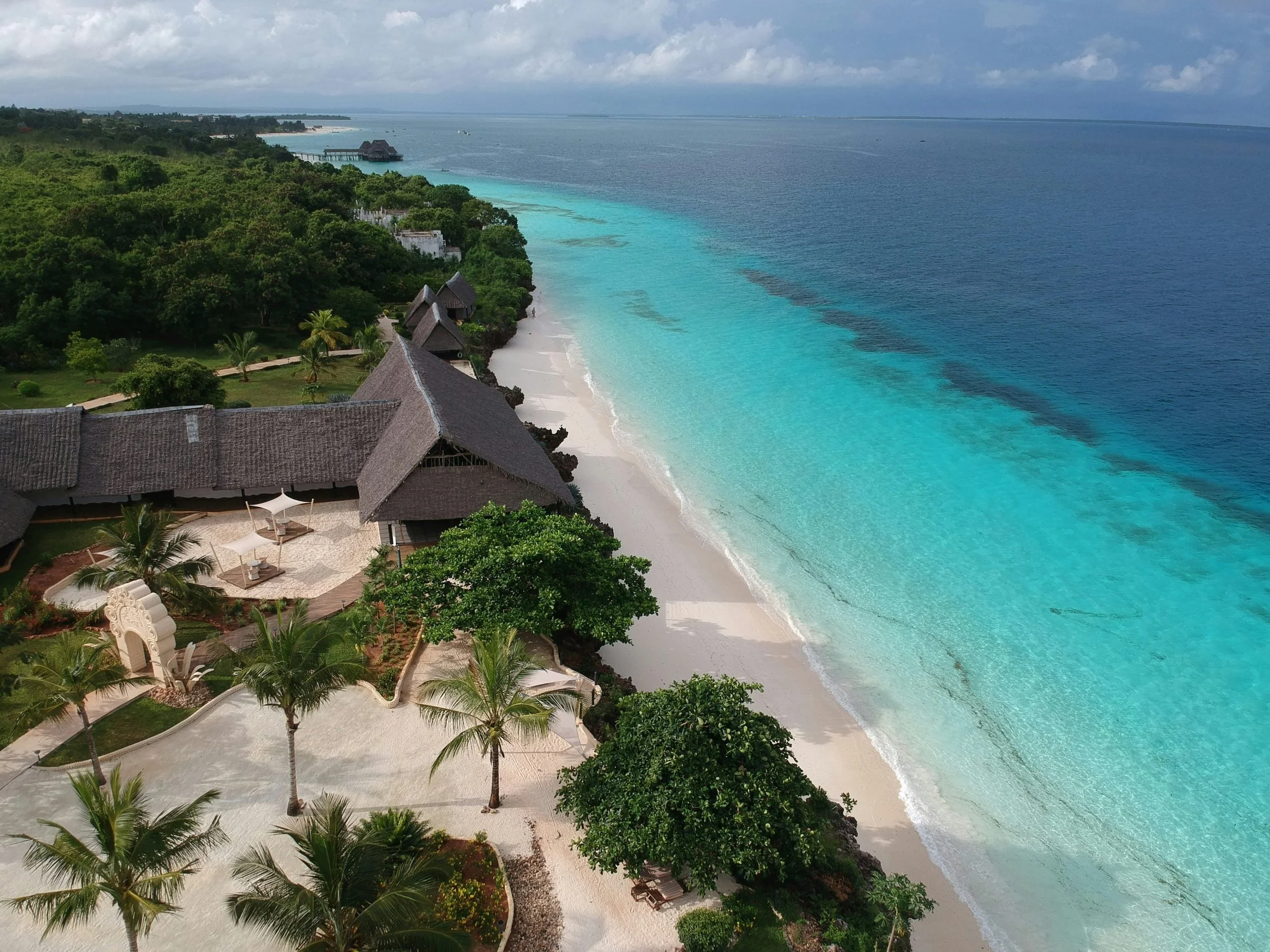
Image courtesy of @TheTravelHub
If you think Zanzibar is an island, then you’re wrong..
Zanzibar is an archipelago of around 50 islands off the coast of mainland Tanzania. Its two principal islands are Unguja and Pemba, although when most people talk about visiting “Zanzibar”, they usually mean Unguja, the main island where Stone Town and Zanzibar International Airport are located.
Other islands in the archipelago include Mnemba, Chumbe, Bawe, Changuu and Tumbatu. However, several private-island destinations commonly combined with Tanzanian safaris including Mafia, Thanda and Fanjove are seperate from the Zanzibar Archipelago.
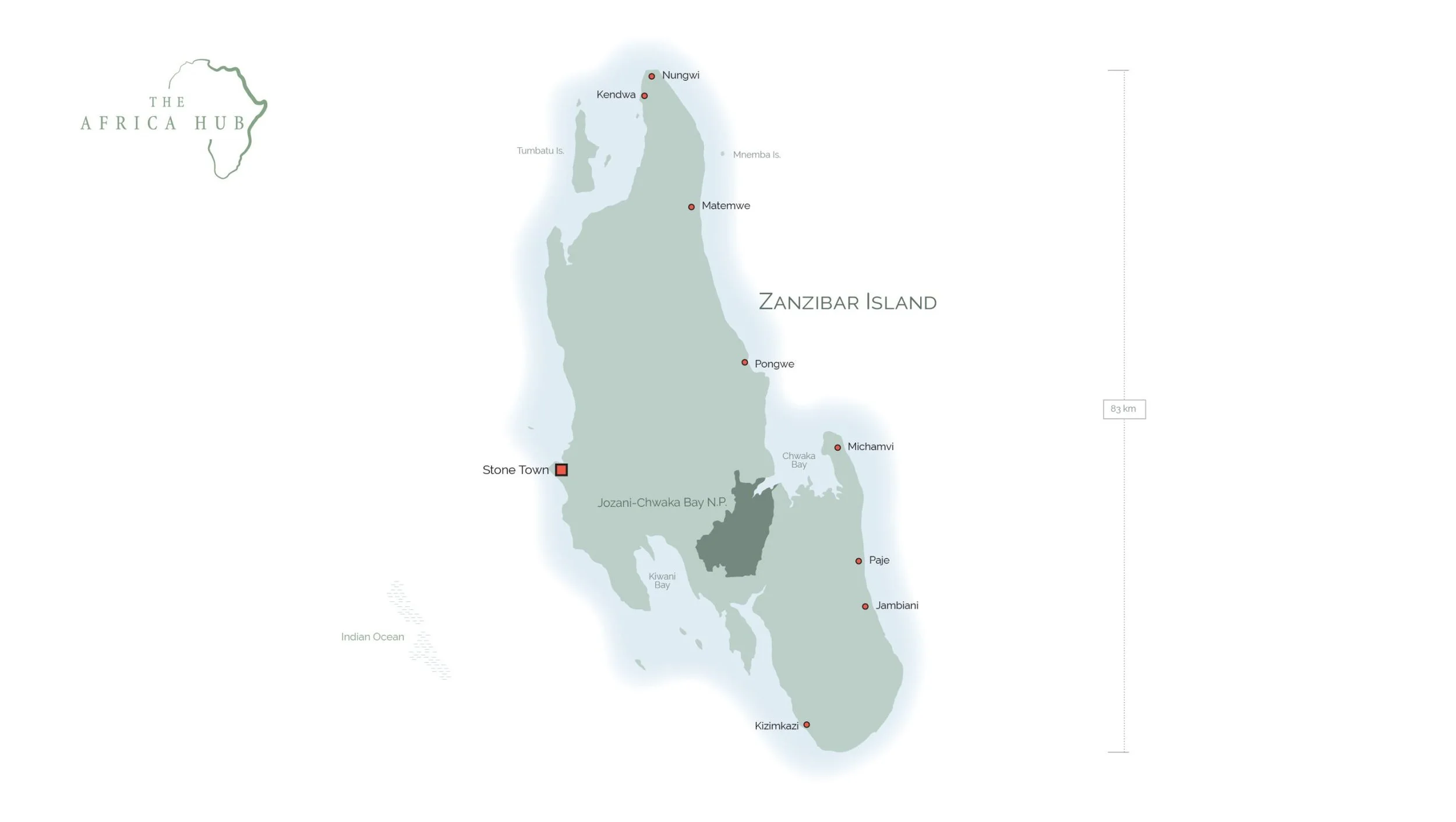
Unguja itself is relatively compact, measuring approximately 85 kilometres from north to south and 35 kilometres across. This means most excursions are possible from most beach areas, although transfer times differ considerably and should still influence where you stay.
Zanzibar is semi-autonomous, with its own president, parliament and laws. It is also a living, working island rahter than a purpose-built resort destination: communities, farms, fishing villages and schools exist alongside it’s hotels. That is part of its character and something visitors should experience respectfully.
The population is prdominantly Muslim. Away from hotel beaches and swimming pools, visitors should dress modestly, ideally covering shoulders and knees. Ramadan can also affect restaurant opening hours, excursions and the general rhythm of island life.
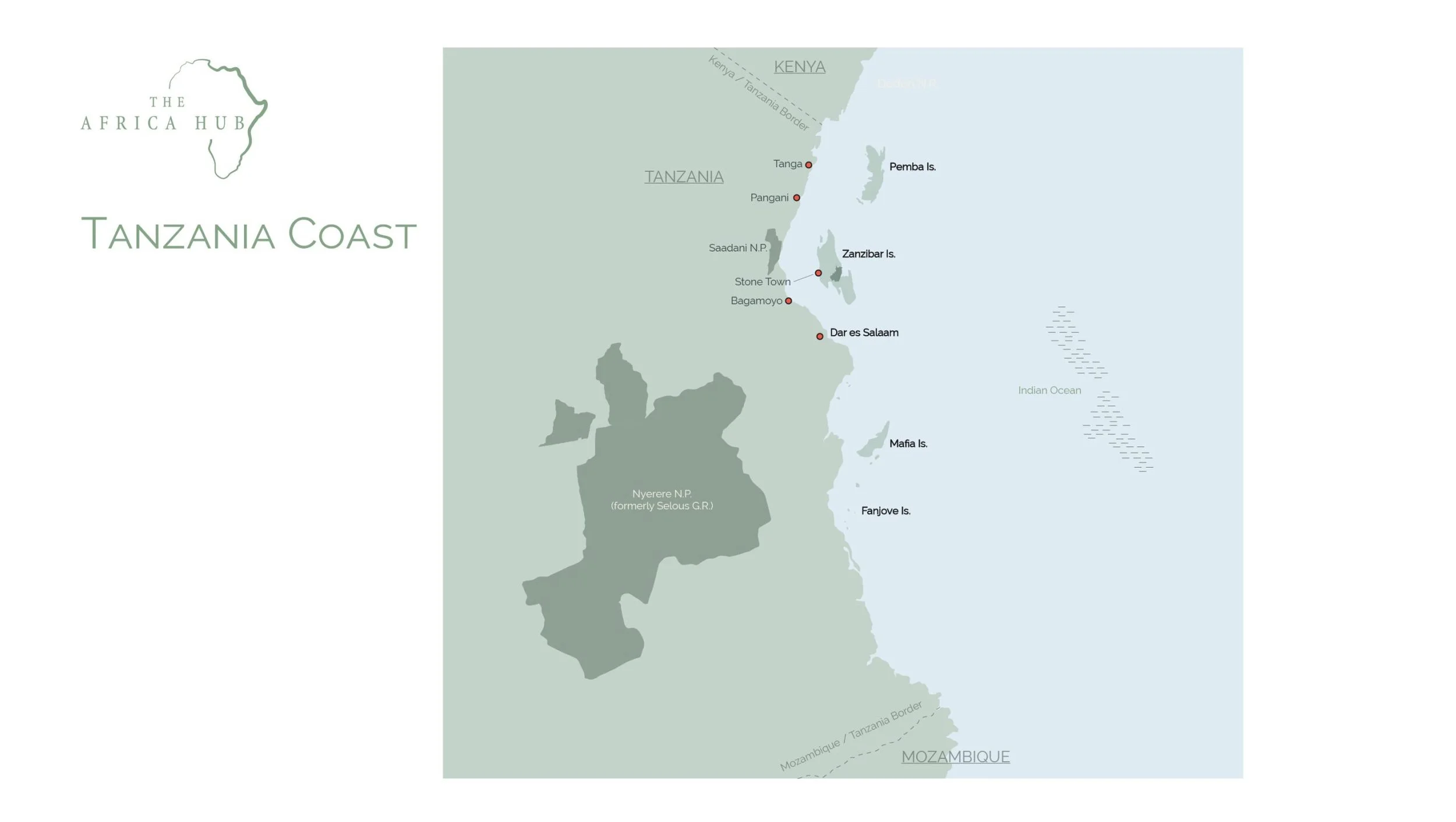
Image courtesy of @TheAfricaHub
A Brief History of Zanzibar
Zanzibar’s culture has been shaped by more than a thousand years of trade across the Indian Ocean.
Arab, Persian and Indian merchants were travelling through the islands by the eighth to tenth centuries. Zanzibar later became an important Swahili trading centre before coming under Omani rule in 1698. By the nineteenth century, the island was central to the trade in cloves, spices and ivory, as well as the deeply painful history of the East African slave trade.
Zanzibar became a British protectorate in 1890 and gained independence in 1963. Its long, and complicated history remains visible in Stone Town today, where African, Arab, Indian, Persian and European influences sit side by side.
Why Stone Town Deserves More Than a Quick Visit
Stone Town is the only part of Zanzibar where the main attraction is not the beach. Inside it’s historic centre, narrow passageways lead between coral-stone buildings, intricately carved doors, markets, mosques, rooftop restaurants and unexpected glimpses of the sea.
This UNESCO World Heritage Site contains centuries of history within a remarkably small area. Visitors can explore Darajani Market, watch the waterfront come alive around Forodhani Gardens at sunset and eat at restaurants that feel entirely seperate from the resort experience. Stone Town is also the starting point for boat trips to places such as Changuu, Nakupenda, Chumbe and Bawe.
It is warm, busy and sometimes noisy, so it will not suit someone wanting to spend the entire day beside a pool. However, I would strongly recommend staying for at least one night, ideally before moving on to the beach. Treating Stone Town as a hurried stop between the airport and a resort misses much of what makes Zanzibar different from an ordinary fly-and-flop island.
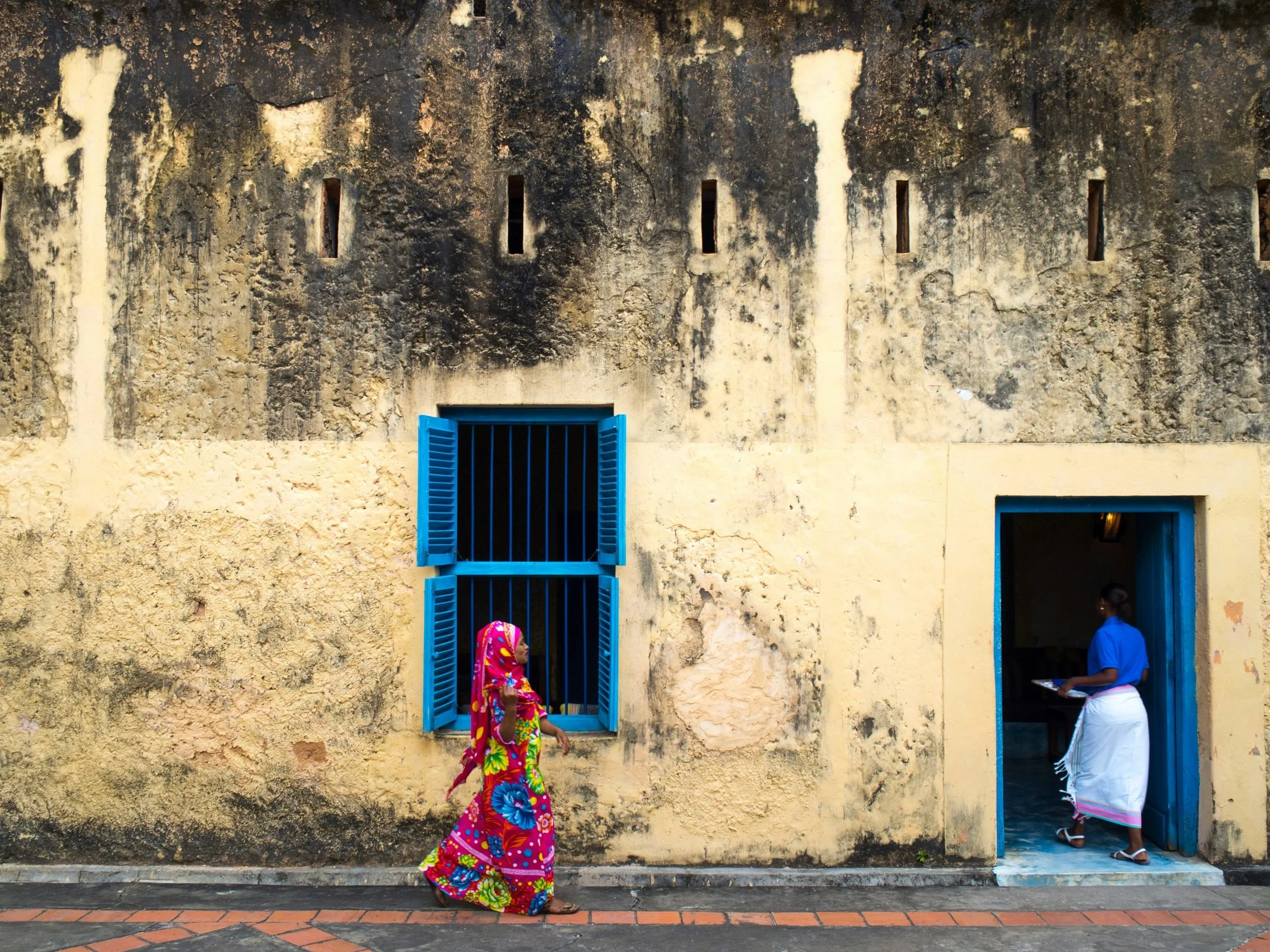
Image courtesy of @TheAfricaHub
Understanding Zanzibar’s Tides
The tides are one of the most important things to understand before choosing a hotel.
On the north and north-west coasts, particularly around Numgwi and Kendwa, ocean swimming is generally possibly througout more of the day. These areas are livlier and popular with travellers who want easy access to the sea.
Along much of the east and south-east coast, the sea retreats dramatically at low tide. The exposed reef, shallow lagoon and immense sand flats create some of Zanzibar’s most beautiful and distinctive scenery but swimming directly from the beach may only be possible during certain parts of the day.
This should not automatically be viewed as a disadvantage. Low tide creates opportunities for long walks, photography and watching the colour of the coastline change. Many hotels also have excellent swimming pools. The important question is whether you need to swim in the ocean at any given moment, or whether you would prefer the space and tidal drama of the east coast.
Reef shoes are useful in many eastern areas because or coral and sea urchins.
When is the best time to visit Zanzibar?
Zanzibar is warm throughout the year, with daytime temperatures generally sitting around the high twenties to low thirties Celsius.
There are usually two wetter periods:
The short rains typically fall between mid-October and December
The longer rains generally occur between March and May
Rain is often delivered in tropical showers rather than endless weeks of grey weather, although April is usually the wettest month and some hotels close during this period.
Rather than asking only which month is “best”, it is worth considering what kind of trip you want, what you plan to combine Zanzibar with and how comfortable you are with occasional tropical rain.
Choosing the right part of Zazibar
There is no single “best” part of Zanzibar. The right choice depends on whether you want to swim throughout the day, explore beyond your hotel, experience village life, enjoy a lively atmosphere or retreat somwhere wonderfully quiet.
Bawe Island: private-island luxury with resort facilities
A short boat jouney from Stone Town, Bawe offers a private-island setting without the long transfer normally associated with remote island retreats. It is a full-scale luxury resort with private-pool villas, several restaurants, a spa, sports facillities and a children’s club.
Bawe suits families and couples who like the idea of staying on an island but still want choice, facilities and polished service. It feels more like an exclusive resort occupying it’s own island than a tiny castaway hideaway.
Pro’s:
Relatively easy to reach from Zanzibar Airport via Stone Town
Private-pool villas and extensive resort facilities
One of Zanzibar’s better private-island choices for families
Con’s:
With around 70 villa, sit’s not an intimate island hideaway.
Everything arrives by boat, which can occasionally affect logistics
The west-coast water is calmer but may not have the brilliant turquoise appearance of the east coast.
Recommended Hotel: Bawe Island Resort
Kama: quiet west-coast seclusion
Kama lies north of Stone Town on one of Zanzibar’s least-developed stretches of coastline. It’s west-coast position brings calmer water, gentler tides and beautiful sunsets over the Indian Ocean.
It works particularly well as the beach half of a Stone Town and coast itinerary. Zanzi Resort is the principal luxury option, offering just a small collection of villa among extensive tropical gardens.
Pro’s:
Calm, generally swimmable water without dramatic tidal changes.
Beautiful sunsets over the ocean.
Around 40 mintues from both Stone Town and the airport
Con’s:
Very little to see or do outside the resort
Only a small choice of accommodation.
Guests are largely reliant on their hotel for dining and entertainment.
Recommended Hotel: Zanzi Resort
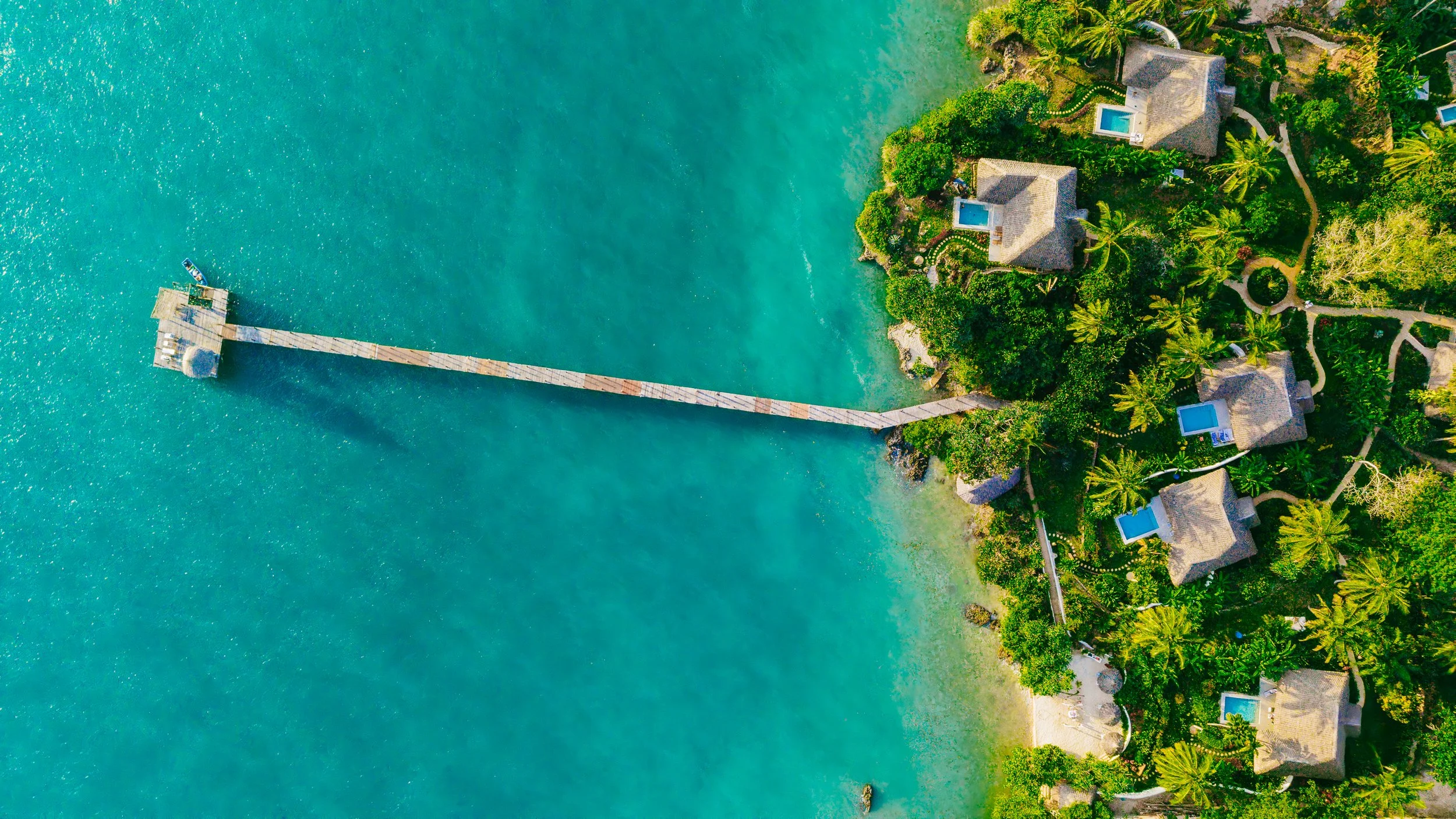
Zanzi Resort in Kama, Zanzibar - image ©zanziresort
Magapwani: golf, horses and something different
Magapwani is a good alternative for travellers who want more than a conventional beach holiday. Sea Cliff Zanzibar is home to the island’s only golf course, which has nine greens played from different tees to create a full 18-hole round.
Visitors can also go horse riding, swim with horses or visit Magapwani Coral Cave. It’s location is approximately 40 minutes from Stone Town makes it possible to combine beach time with culture and activities.
Pros:
Home to Zanzibar’s only golf course
Horse riding and other activities to suit active travellers
Conveniently positioned for Stone Town and airport
Cons:
The golf course has nine greens rather than 18 seperate holes
It lacks the long white beaches found elsewhere
The area has relatively little independent dining or village life.
Recommended Hotel: Sea Cliff Resort & Spa
Muyuni: Mnemba view and plenty of resort space
Muyuni lies opposite Mnemba Atoll and provides one fo the most convenient mainland starting points for snorkelling and diving trips in the area. Its long beach and expansive ocean views allow larger resorts to feel relatively spacious.
The tides are less dramatic than on many east-coast beaches, although they are still noticeable. Muyuni works particularly well for families, divers and snorkellers who want the convenience and facilities of a proper resort.
Pros:
Excellent access to Mnemba Atoll excursions
More dependable swimming than on much of the east coast
Long beach and large resorts with extensive facilities
Cons:
Very little village life or independent dining nearby.
The atmosphere is resort-led rather than distinctly local.
Swimming conditions are better than father south, but still affected by tides.
Recommended Hotel: The Mora, Zanzibar
Mnemba Island: barefoot luxury and marine life
Mnemba is one of Zanzibar’s most celebrated private-island retreats. The island is occupied by a single lodge with just 12 bandas, creating an intimate expereince for approximately 24 guests.
The surrounding atoll provides exceptional snorkelling and diving, wihile the emphasis is on nature, privacy and unforced barefoot luxury. This is not a conventioal resort with shops, entertainment and multiple restaurants - it is somewhere to slow down and appriciate the setting.
Pros:
Only 12 bandas, creating exceptional privacy
Outstanding access to snorkelling and diving
An intimate and romantic conclusion to safari
Cons:
One of Zanzibars most expensive places to stay.
Limited restaurant and entertainment choices.
Transfers require careful planning because boat crossings operate during daylight.
Recommended and only hotel: &Beyond Mnemba Island
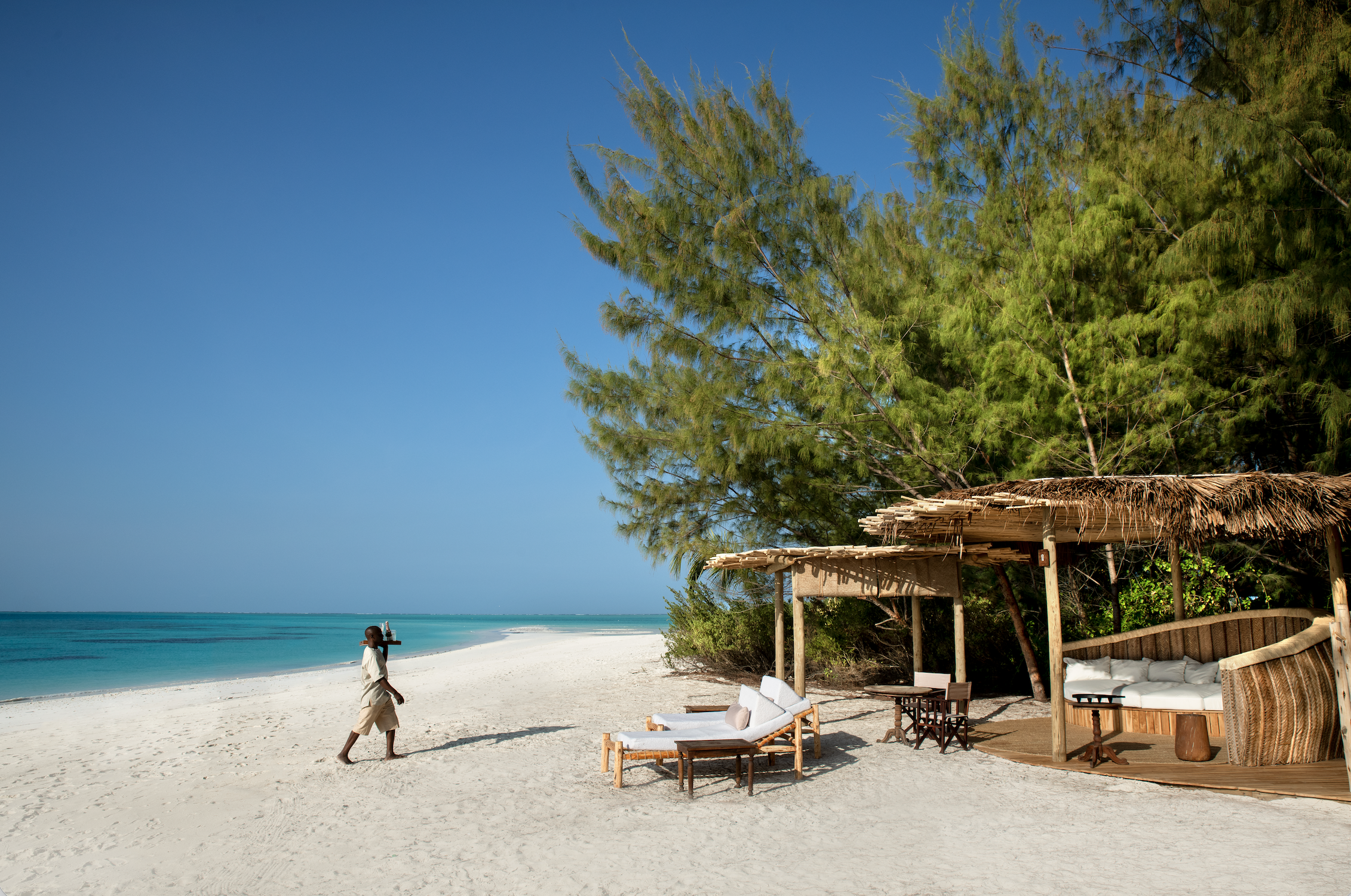
The beautiful &Beyond Mnemba island - image ©&Beyond
Matemwe: boutique hotels and village character
Matembwe combines small boutique hotels with a genuine fishing and seaweed-farming community. Mnemba sits on the horizon, and snorkelling and diving trips depart conveniently from the surrounding coast.
At low tide, the water retreats to expose immense sand flats and seaweed farms. This produces beautiful scenery and a fascinating working landscape, but travellers must be comfortable using the hotel pool when ocean swimming is not possible.
Pros':
Good selection of smaller boutique hotels.
Early access to Mnemba Atoll for snorkelling and diving
Greater sense of local life than in purpose-build resort areas
Cons:
Strong tides considerablu restrict ocean swimming.
Reef shoes are advisable becasue of coral and sea urchins
The area is gradually becoming more developed.
Recommended Hotel: Zanzibar Sunrise
Pwani Mchangani and Kiwengwa: Spaces resort territory
This long stretch of coast has been home to Zanzibar’s larger resorts for many years. Although there is considerable development, the hotels are spread along an extensive beach and it can feel less compressed than Nungwi.
It is a practical choice for families, groups and travellers wanting all-inclusive facilites. It can also offer useful availability when Zanzibar’s smaller boutique properties are full.
Pros:
Broad choice of family-friendly and all-inclusive resorts
Long, wide beach with dramatic colours
Good availability for groups and peak-season travel.
Cons:
Stong tides retrict swimming at certain times
Some public sections have persistent beach sellers.
There is little independent dining or activity outside the resorts.
Recommended Hotel: LUX Marijani
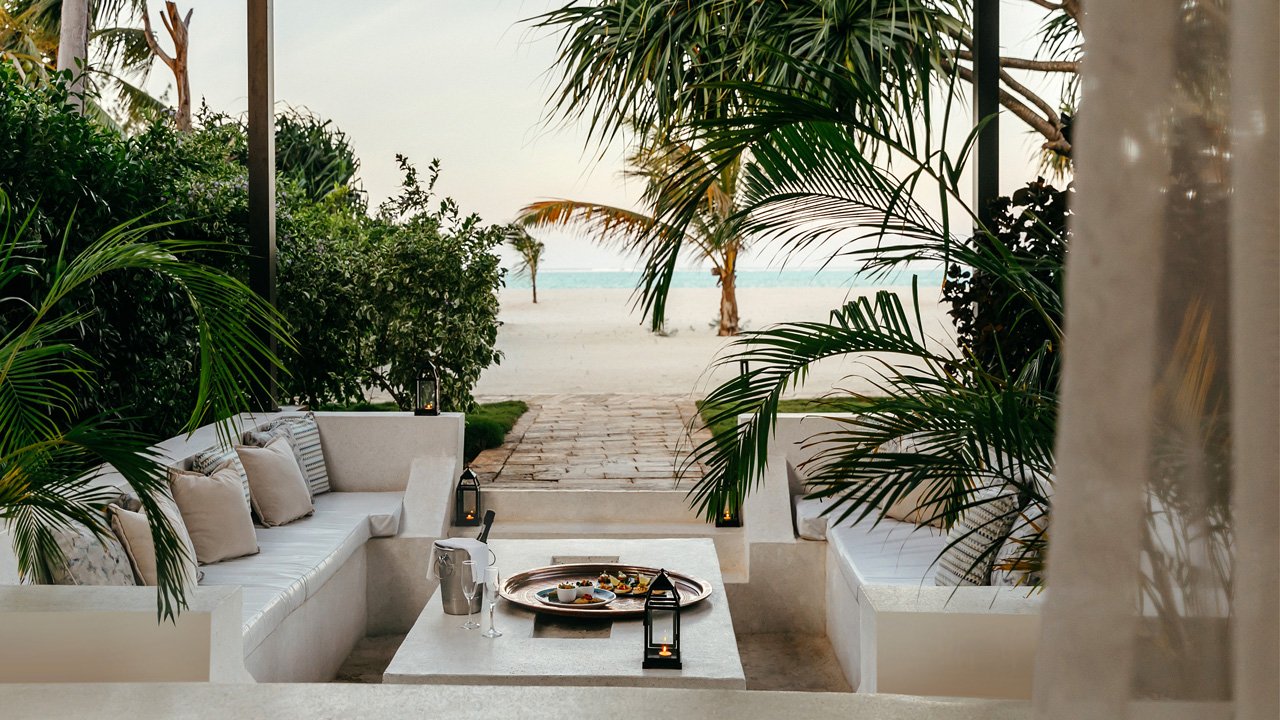
The Grand LUX Suites @ Lux Marijani - image ©LUXMarijani
Pongwe: small coves and privacy
Unlike the uniterrupted beaches found farther north and south, Pongwe comprises a series of small sandy coves between coral cliffs. Many hotels occupy their own bay, providing privacy without requiring a journey to Zanzibar’s far south.
It is especially suited to honeymooners and boutique-hotel clients who value quiet surroundings. Some properties, including Tulia, also combine a smaller scale with family-friendly features.
Pros:
Secluded coves create a strong sense of privacy
Attractive selection of boutique hotels
Quieter than Zanzibar’s main resort areas.
Cons:
Beaches are shorter and can contain rock or coral.
Strong tides affect swimming
Very little exists outside the hotels.
Recommended Hotel: Tulia Zanzibar
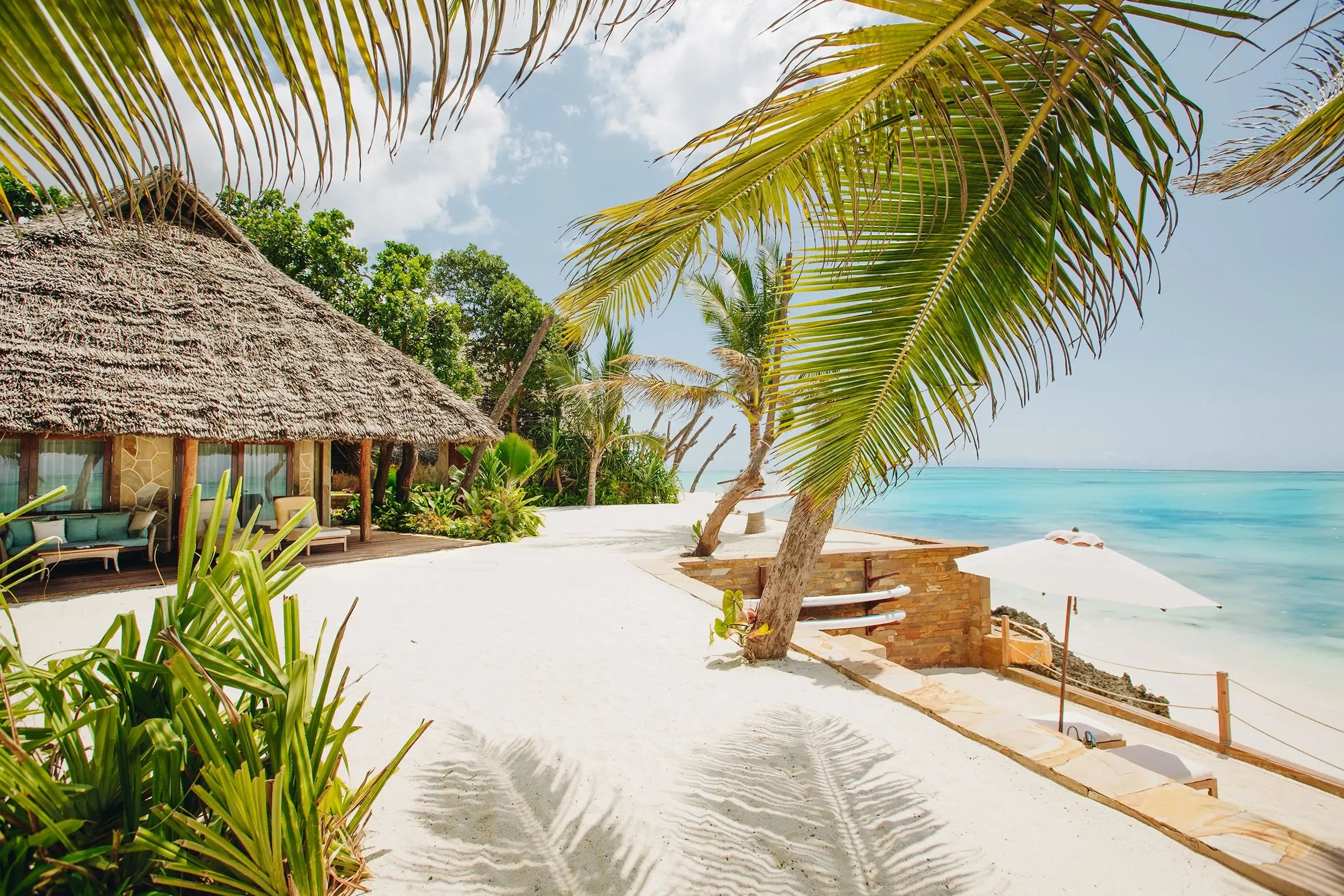
Image ©Tulia Zanzibar
The Island Pongwe: an accessible private-island experience
The Island Pongwe is a tiny adults-only hotel occupying a coral outcrop just offshore. At low tide, guests walk across the sand; at high tide, they arrive by boat.
With only six villas, one restaurant and no televisions or music from personal devices in shared areas, it is intentionally quiet. It offers the feeling of a private island at a more accessible price than Zanzibar’s most exclusive retreats.
Pros:
Only six villas, creating an intimate experience.
A private-island atmosphere without an ultra-luxury price.
Excellent for anniversaries, honeymoons and digital detox.
Cons:
Tidal access makes it unsuitable for some mobility needs
Adults-only, with no facilities for families.
One restaurant and very little extertainment or variety
Recommended Hotel: The Island Pongwe
Uroa and Marumbi: an emerging resort coast
Uroa and Marumbi have historically been among the quieter parts of Zanzibar, but substantial hotel development is changing the coastline. New properties can provide attractive opening offers and a broad range of room types.
The scenery combines sand, coral cliffs and a more sheltered coastline. However, the water becomes greener towards Chwaka Bay and does not always resemble the turquoise Zanzibar beach seen in promotional photographs.
Pros':
New hotels may offer competitive introductory rates.
Useful availability for groups and larger bookings
Still quieter than the most established resort areas.
Cons:
Significant construction and development may affect the atmosphere.
Strong tides influence beach access and swimming.
The water becomes darker and greener towards Chwaka Bay
Recommended Hotel: Ycona Luxury Resort
Michamvi: each-coast beaches with west-facing sunsets
Michamvi sits on a peninsula, producing two very different coastal experiences within the same area. Some properties face the open Indian Ocean, while others look across the calmer water of Chwaka Bay.
Its unusual geography means guests can enjoy an east-coast setting and, from certain locations, watch the sun set over the water. The coastline changes between beaches, coral cliffs and small secluded coves.
Pros:
Some hotels offer rare overwater sunset views on the east coast.
Varied coastlines with beaches, coves and coral cliffs.
Excellent chice for privacy-led and romatic stays
Cons:
The precise side of the peninsula dramatically changes the experience.
Chwaka Bay has calmer but greener water.
It involves one of the longer transfers from Zanzibar Airport
Recommended Hotel: Konokono Hotel
Pingwe: Boutique Hotels and dramatic scenery
Pingwe occupies the ocean-facing side of the Michamvi Peninsula. It is home to The Rock, teh famous restaurant positioned on a coral outcrop just offshore and reached on foot or by boat according to the tide.
The surrounding coastline is known for small, independently run luxury properties, cluffs and secluded coves. It appeals to couples and boutique-hotel clients who value character and striking scenery.
Pros:
Home to the instantly recognisable Rock Restaurant
Strong collection of smaller, owner-run properties
Dramatic coves, cliffs and ocean views
Cons:
Not every hotel has direct access to a sandy beach.
The open-ocean side is exposed and stongly tidal
Day visitors to The Rock make the immediate area busier
Recommended Hotel: Upendo Beach
Bwejuu: peaceful without being remote
Bwejuu lies along the extensice beach between Pingwe and Paje. It provides a quieter setting than Paje while keeping its restaurants, beach bars and kitesurfing scene within each reach.
The area is known for long beaches and upmarket boutique properties, including Baraza, Breezes, The Palms and Xanadu. It is particularly well suited to couples and honeymooners who want peace without complete isolation.
Pros:
Long, wide beach with room for uninterrupted walks.
Excellent choice of upmarket boutique hotels.
Quiet setting within easy reach of Paje
Cons:
The sea retreats a considerable distance at low tide.
Ocean-swimming windows can be short
There is relatively little happening within Bwejuu itself.
Paje: Zanzibar’s lively Kitesurfing capital
Paje is one of the few beach areas where much fo the experience happens outside the hotel. It’s restaurants, cafes, beach bars, kitesurfing schools and independent business create a sociable atmosphere.
The broad, shallow lagoon and seasonal cross-shore winds have made Paje a major kitesurfing destination. It is well suitedd to active travellers, solo visitors, younger couples and those who prefer village life to an enclosed resort.
Pros:
One of East Africa’s best-known kitesurfing destinations
Large selection of independent restaurants, cafes and bars.
Lively, sociable atmosphere outside the hotels.
Cons:
Can be busy, young and noisy in the evenings.
Kitesurfers dominate the lagoon on windy days
The tidal beach is less suitable for unrestricted ocean swimming.
Recommended Hotel: The Palms Zanzibar
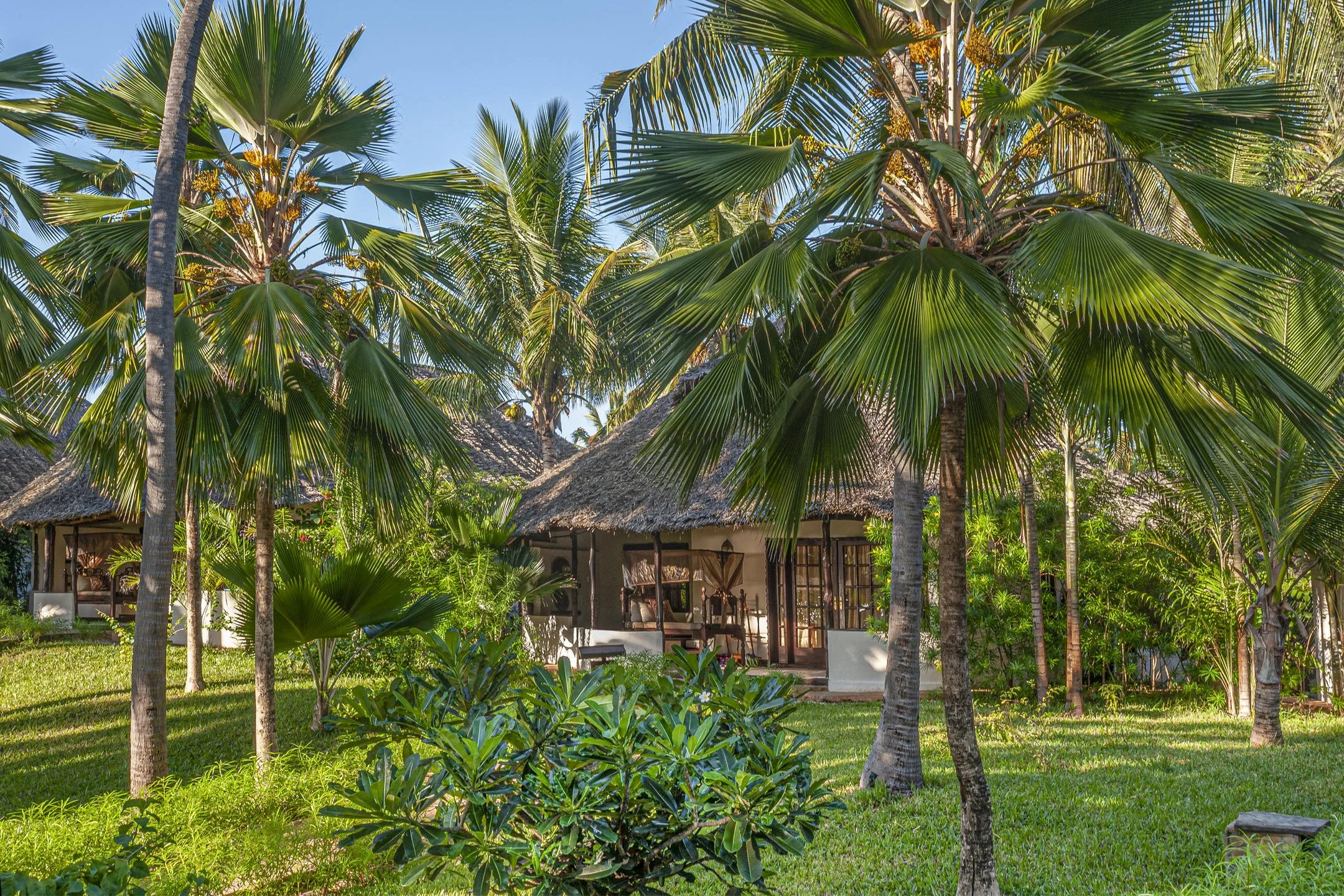
The Palms Zanzibar - image ©ThePalmsZanzibar
Jambiani: village life without Paje’s crowds.
Jambiani is a longstanding Swahili fishing and seaweed-farming village where tourism has grown among existing community life. It has a more relaxed and grounded atmosphere than nearby Paje.
Accommodation consists mainly of small hotels, guesthouses and villas. The northern section has better access to continuous beach, while hotels father south may sit on coral cliffs.
Pros':
Genuine working-village atmosphere
Kitesurfing conditions without Paje’s busiest crowds
Good choice of small, independently run accommodation.
Cons:
Beach quality and access vary between north and south.
Limited facilities at many of the smaller properties
Rapid development is beginning to alter its village character
Recommended Hotel: Sharazad Hotel
Kizimkazi: remote villas and complete quiet
Kizimkazi lies in Zanzibar’s far south and feels deliberately removed from the islands busier holiday areas. This is where the private-pool-villa style first became established, with The residence Zanzibar remaining one of it’s best-known properties.
The coast consists mainly of cliffs and small bays rather than a continuous beach. it is ideal for travellers who genuinely want to retreat into their resort after a busy safari.
Pros:
Excellent private villas and pool accommodation
Very peaceful, secluded setting
Strong choice for a quiet post-safari stay
Cons:
Long transfer from the airport and Stone Town
Very little independent dining or activity nearby
Beach access varies significantly between hotels
Recommended Hotel: The Residence Zanzibar
Fumba: convenient west-coast calm
Fumba is situated approximately 30 minutes from Zanzibar Airport, making it one of the most convenient beach areas for a short stay. Its west-coast position provides calmer water, gentler tidal changes adn sunsets over the sea.
It is also a departure point for excursions through the Menai Bay Conservation Area. The newer Fumba Town development gives parts of the region a residential rather than resort character.
Pros:
One of the shortes beach transfers from the airport
Calm water and west-facing sunsets
Convenient departure point for Menai Bay excursions
Cons:
The beach is not among Zanzibar’s most impressive
Ongoing development can affect the holiday atmosphere
Mangorves and greener water replace the classic turquoise-east-coast scenery.
Recommended Hotel: Fumba Beach Lodge
Nungwi: Swimming, activities and a lively atmosphere
Nungwi occupies the northern tip of Unguja. Once primarily known for fishing and traditional dhow building, it is now one of Zanzibar’s busiest holiday areas, with a substantial selection of hotels, restaurants, bars, shops and dive centres.
It’s great advantage is the water. Although tides remain present, the sea does not retreat across vast flats as it does on the east coast, making swimming possible throughout more of the day.
Pros':
Reliable access to the sea for swimming.
Excellent selection of restaurants, activities and dive centres
Good for families, first-time visitors and sociable travellers
Cons:
One of Zanzibar’s busiest and most commerciaslised areas
Beach sellers can be persistent
Some sections are noisy and crowded during peak periods.
Recommended Hotel: The Z Hotel
Kendwa: a classic tropical beach with some atmosphere
Kendwa lies just south-west of Nungwi and shares the north coast’s favourable swimming conditions. It’s wide, pale beach and calm water make it one of Zanzibar’s strongest choices for a traditional beach holiday.
It is generally more relaxed than central Nungwi, although it has several large resorts and periodically becomes lively around it’s well-known full-moon parties.
Pros:
Excellent beach with swimming available throughout most of the day
More relaxed than central Nungwi
Good choice for families, couples and first-time visitors
Cons:
Larger resorts give part of Kendwa a commercial feel
Full-moon events can create considerable noice and activity.
Less independent dining and village life than Nungwi or Paje
Recommended Hotel: Elewana Kilindi
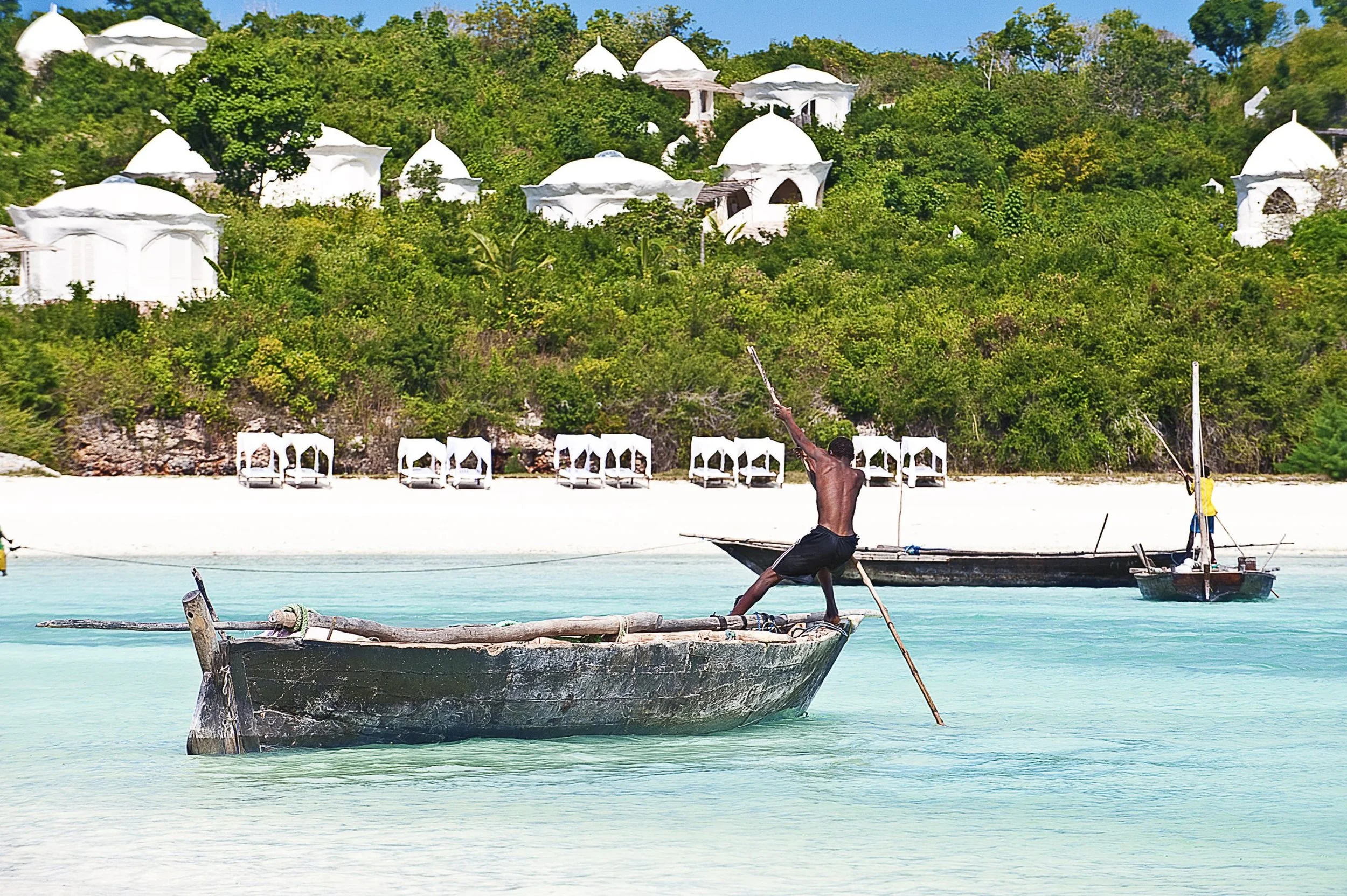
Elewana Kilindi Hotel Zanzibar - image ©ElewanaCollection
Pemba Island: greener, quieter and more adventurous
Pemba forms part of the Zanzibar Archipelago but offers a very different experience from Unguja. It is greener, hillier and far less developed, with an economy still centred heavily on fishing, farming and clove production.
Its deep channels and dramatic underwater walls make it particularly attractive to experienced divers. Accommodation is limited, and reaching the island requires a domestic flight, but that remoteness is central to its appeal.
Pros:
Excellent, uncrowded wall diving
Green landscapes and far less commercial development
Strong sense of traditional island life
Cons:
Very limited selection of hotels and restaurants
Domestic flights do not always connect conveniently with international services.
More conservative, with visitors needing to be particularly respectful about dress and behaviour.
Recommended Hotel: The Manta Resort